Saturday, May 30, 2020

Saturday, April 25, 2020
Saturday, April 4, 2020
March 28, 2020 Chapter 18 What is Culture? Chapter 19 What makes a Man?
What Makes a man
Today we started the session with recapping what is culture.
In Chapter 18 we learnt about 4 types of man, the first one 'Stone man' has no plans, no passion and no attachment to life. The second one, 'Plant man' has a minimal basic emotion or feeling for others, the third one 'Animal man' is desire ridden and ego-centric, his activities are mainly guided by feelings and impulses, and finally man is best in creation having maximum capacity of emotion and feelings to embrace the world.
In Chapter 19 we learnt about what is Essence of Man, How the physical body, mind and intellect constitutes the personality of the man. Swamiji explains how human mechanism is like electric bulb heater or fridge without the electricity. They are useless. Similarly the consciousness functions through body mind intellect.
Contributed by Mr.. S
Sunday, March 22, 2020
March 15, 2020 EBalavihar class Chapter 18 What is Culture?
We started the class with a recap of Chapter 15 Science and Religion, Chapter 16 What is Religion? and Chapter 17 Vitals of a Nation. Then we moved onto reading and discussing Chapter 18 What is Culture?
Chapter 18 discussed about how culture is developed when a set of people live for a long period of time in a particular geographical area. The climatic and the geographical conditions and the environment influenced the people and determined their values of life and a culture is set. Swami Chinmayananda gives an example of differences in the character of people in the East and West. East provided a plentiful land and so there was tranquility and love in the people in the East whereas materialism took roots in the West and created a fundamental trait of conquest, fighting and procuring. Thus, quality of culture depends upon the type of values followed by people. The difference in culture lies in the values and virtues of life entertained by the people.
We also read about Religion and how Religion must adapt to the changing times and conditions, otherwise civilization of a society deteriorates. We discussed about Veda Vyasa and some of his important works in Hindu tradition, the Vedas, Puranas and other important works like the Mahabharata, to translate cultural and religious values so civilization flourishes for mankind.
Indian Culture has survived the test of time because of the enduring and universal nature of its values and because in times of need, we have had mahatmas emerge to guide us.
Contributed by RA
Saturday, February 29, 2020
Chapter 15 Science and religion, Chapter 16 What is religion? Chapter 17 Vitals of a nation.
Chapter 15 Science and religion.
We learned about the four stages of the development of human intellect. In the Age of perception or The age of Gazing, we see things but do not ask questions. In the Age of observation, we are asking questions and looking for causes. These causes need not be linked by any logic, they could be mere superstitions. In the Age of scientific inquiry, we find causes that are linked by data, facts, and logic. The final stage is the Age of Contemplation, when we are asking questions beyond what we can link by directly verifiable logic. We start asking questions about the giver of the natural lows and the creator of the Universe etc.
These four stages need not be four periods in history. These stages can coexist as new areas of observations start their journey through these stages at different times.
Chapter 16 What is religion.
Religion is a combination of ritualism and philosophy. Philosophy gives religion a purpose, a meaning. Ritualism gives religion a structure which makes it possible to pursue its goals. Without its philosophy religion is nothing but superstition. Without ritualism religion is madness.
Even other areas such as science have its philosophy, and its ritualism.
Chapter 17 Vitals of a nation.
Economics, scientific progress, and politics form the backbone of a country. However, by themselves they do not define a nation. A nation needs a common cause. A nation needs a sense of discrimination amongst its people towards its actions. Philosophy explores this purpose and when philosophy is translated with practical living it becomes religion.
A nation is comprised of individuals and the nature and texture of their mental equipment determines their nature and in turn the nature of the nation. Religion works on the minds of individuals and by inculcating good values, helps improve the nation.
A nation is comprised of individuals and the nature and texture of their mental equipment determines their nature and in turn the nature of the nation. Religion works on the minds of individuals and by inculcating good values, helps improve the nation.
Blog post contributed by SD
Sunday, February 9, 2020
Chapter 14 Harmony and Poise Chapter 10: Mechanism of Action
Chapter 14 Harmony and Poise
Today, human beings live in an age of confusion and tension. External challenges persecute an individual and make life full of agitation and sorrow. Therefore, to bring about success and joy in life, the only way left is to control the subjective confusions and intelligently develop one’s inner equipment to face difficult situations. The life of harmony can be lived by rising above our limited egocentric view,
and expanding our mind to accommodate a constant awareness of the totality of the world, the entirety
of mankind and the vastness and wholeness of the universal problems. To merge one’s individual life with the resonant cadence of the whole is to bring about a harmonious and happy existence.
-MS
Chapter 10 MECHANISM OF ACTION

Our desires and thoughts are rooted in our vasanas. Our vasanas decide what we pay attention to and what catches our eye. The vasanas determine our actions too. However, human beings have the unique opportunity to override the vasanas with self effort. Vasanas are like etchings on a Gramophone record. The song that comes out is what is already etched out. However , we can erase and recarve the etching , but only with persistent effort.
The great seers looked inwards and paid attention to minds activity and analysed the source and movement of thought and action. The above image shows the mechanism of action originating.
Sensation/ Contact : Our senses perceive the world. If we are alive we perceive. We might look at a rasgulla and look at the shape , color etc. We might appreciate that they are well made. Or look at a sunset and appreciate. Nothing wrong.
Thought: After a fraction of second of gap, thought comes in. It creates an image of us eating and enjoying the rasgulla. Or maybe it comes in creating an image of us enjoying the sunset everyday.
As soon as the image is formed, desire to fulfill the image is born and ready.
4. Once the desire is born, it will dictate our actions. It becomes the goal.
If we pay attention we can catch the gap before thought comes in to talk to us or create the image. Just paying attention to it gives us the power to delay the thought. If this happens, then we control the thoughts and hence the desire and not the other way around. Just the experience that this is how desire moves in itself is an achievement. We persistent effort we can extend that gap and not become slave of desires.
Meanwhile our vasanas are the ones that determine how our senses perceive and also how thoughts move. But if we can pay attention and increase that gap, the vasanas will get weaker and weaker. Just like camphor burns itself out to leave nothing but fragrance, our vasanas will burn out leaving the divinity within us.
Contributed by RV
Thursday, January 23, 2020
Chapter 10- The Mechanism of Action Chapter 11- The Law of Karma Chapter 12 The play of Mind . Chapter 13: Fundamentals of Living : Wednesday, January 22, 2020
Wednesday, January 22, 2020
We started the class with 'Guru Stotram' and recap of Chapter 10 - The Mechanism of Action
Man's Vasanas (tendencies) drive his attitude and actions, and define his individuality. When the habits remain unfulfilled, they create discontentment and unhappiness.
Unlike other living creatures, man is gifted with the unique ability to exercise self-control and choose his actions.
Our scriptures provide guidance on how to control our mind and help overcome our Vasanas, unhappiness; and realize our inner divine nature.
This is similar to Camphor being lit in front of God. When the camphor burns away, we experience the Lord and His divinity..Man's self-effort (Purushartha) will help him channel his desires, thoughts and actions in the right path.
Chapter 11: The Law of Karma
Continuing with the discussion on Vasanas that influence man's desires and actions, we got introduced to the 'Law of Karma'. It is not just based on past experiences in life and destiny that unfolds (The law of Destiny) , but is a law that covers the past, present and future...
Man's past actions or karma drive his present status. If a man has had pure and noble thoughts and experiences since his birth, he will exhibit good nature, if he has had vicious experiences, he will assume those qualities. He has no control on the past that has gone by and greatly influenced his present...
However, man is gifted with the capacity to choose how he responds in the present, to be able to carve out his future. This is called self-effort or 'purusartha'. Choosing the path of good (shreyas) in present, and exercising it with self-effort will make his future better than his present. 'What' one meets in life is destiny and 'how' he meets it, is self-effort
The combination of self-effort and destiny, and its effect is explained through the example of a log of wood.
When a log of wood flows in water, it moves at the same speed as water which is 2 mph. If a motor is fitted to the log of wood that has a speed of 10 mph, movement of the log will now depend on its direction and the flow of river. When directed downstream log will move at 12 mph and when directed upstream log will move at 8 mph.
Law of Karma does not mean we do not have a choice. It means that man can make a conscious and honest effort to respond to present situations and modify his future for good. Here again, our scriptures help with the formula for right living..
Chapter 12: The Play of Mind
Religion is often misconstrued as a set of belies and superstitions but it provides a technique of practical living.
For eg: Religion suggests not to cut nails after sunset. Come to think of it, using sharp blades in the absence of light can hurt someone :)
Man's reaction to his life experiences are based on the quality and texture of his mind, and intellect equipment.
To a scientist, the world is a place of discovered and undiscovered, to a peasant the world insignificant with nothing spectacular, to a poet, the same world is a scenic place. All objects remaining the same, man's inner equipment drives his reaction.
The world is perceived differently by each person, similar to pattern changes in a kaleidoscope based on individual vision. Our religious gurus have suggested 'Master the mind and you master the world' to experience the world in its true form.
Still man wishes to see some quotient of external beauty in this world. To address this, there are three groups of people serving the mankind - Economists that provide wealth and prosperity to people, Politicians that help people co-exist and Scientists that design things for man to use and enjoy.
Even with all this abundance bestowed on man, he is constantly thinking of his sufferings and sorrows.
Religion gives us three eternal values to help man tame his thoughts and feelings and view the world with positivity - Brahmacharya (self-control), Ahimsa (non-injury) and Satyam (truthfulness)
Chapter 13: Fundamentals of Living
Continuing with three eternal values that enable to master his mind, and thereby master the world, we discussed them in detail...
Brahmarcharya (self-control) at the physical level means exercising self-control and not over-indulge. 'Enjoy the world, but not let the world enjoy you' . We discussed the concept of Suppression vs. Sublimation. Rather than total denial of enjoyments, we should experience them in moderation..
Ahimsa (non-injury) is at the mental level. However, note that the operation performed by a surgeon to save someone's life is not cruel, it is done with a good and noble intent.
Satyam (truthfulness) is at the intellectual level. Man should live up to his ideals and conviction at all times, than give into temptations.
Blog post contributed by SP
Friday, December 20, 2019
Chapter 8 Mind and Man Chapter 9 The Path of Perfection December 8, 2019
We started the class with "Guru Stotram" & recapped the previous chapter .
1. Brahmacharya is often misunderstood as "celibacy" but its it means self control and not to over indulge.
2. Ahimsa does not only mean physical violence but also includes NOT thinking or wishing harm to others (jealousy or greed included). Intent of Ahimsa must also be noted (eg. Doctor performing surgery has a good intent and is not considered Ahimsa).
3. Sathyam means having firm conviction and having thoughts, actions and words aligned.
Brahmacharya is at the level of Body, Ahimsa is at the level of Mind and Sathyam is at the level of intellect.
It is better not to utter words if they do not serve any good to anyone even if it is true.
One sees the world the way their mind works. The world is a reflection of you. Eg. Dronacharya asking Yudhistira and Duryodhana to go around the world and giving their feedback matching their minds.
It helps us to grow as a 'Sadhakas' to introspect and log our behavior at the end of each day to see how we responded w.r.to the cornerstones "Brahmacharya", "Ahimsa" & "Sathyam" and make improvements.
Chapter 8: Mind and Man
Man contacts the world through the media of four constituent entities "Body, Mind, Intellect and Consciousness".
Body and consciousness are the same for everyone but Mind and Intellect differ person to person. Human relationships and interaction happen at Mind and Intellect level. Religion and scriptures guides the mind and intellect to be a good 'Sadhaka' and be on the right path.
Man alone has the capacity to discriminate and analyze feelings and apply judgement intellectually instead of momentary impulses.
Mind and intellect decisions oppose each other specially when there are strong emotions involved and hence one should use their "Viveka" (intelligence) to discriminate impulsive reaction and instead make decisions based on intellect after pausing and calming down. Decisions taken without intellectual input mostly causes confusion, chaos and regrets.
Most people choose to make decisions with mind because it does not need much effort compared to using intellect and responding after careful thought.
The secret of success for all of us as "Sadhakas" lies in applying our intellect and respond without being misled by emotions in everyday life or in our work environment filled with insecurity, petty & unhealthy competition.
Chapter 9: The path of Perfection
The quality of mind and intellect component depend upon our inherent and innate tendencies called "Vasanas". Philosophy and religion mold and shape man's vasanas and shapes his personality.
A healthy and powerful mind and intellect can give the power of discrimination to be clear, subtle and brilliant even when the outside environment is disturbing like a towering lighthouse undisturbed by surging waves. A weak mind and intellect can create actions that are lifeless and unproductive with calamitous waves of challenges like a 'neglected boat' in the ocean of life.
Blog post contributed by BV.
The three corner stones of a Sadhaka's life are "Brahmacharya", "Ahimsa" & "Sathyam"
1. Brahmacharya is often misunderstood as "celibacy" but its it means self control and not to over indulge.
2. Ahimsa does not only mean physical violence but also includes NOT thinking or wishing harm to others (jealousy or greed included). Intent of Ahimsa must also be noted (eg. Doctor performing surgery has a good intent and is not considered Ahimsa).
3. Sathyam means having firm conviction and having thoughts, actions and words aligned.
Brahmacharya is at the level of Body, Ahimsa is at the level of Mind and Sathyam is at the level of intellect.
It is better not to utter words if they do not serve any good to anyone even if it is true.
One sees the world the way their mind works. The world is a reflection of you. Eg. Dronacharya asking Yudhistira and Duryodhana to go around the world and giving their feedback matching their minds.
It helps us to grow as a 'Sadhakas' to introspect and log our behavior at the end of each day to see how we responded w.r.to the cornerstones "Brahmacharya", "Ahimsa" & "Sathyam" and make improvements.
Chapter 8: Mind and Man
Man contacts the world through the media of four constituent entities "Body, Mind, Intellect and Consciousness".
Body and consciousness are the same for everyone but Mind and Intellect differ person to person. Human relationships and interaction happen at Mind and Intellect level. Religion and scriptures guides the mind and intellect to be a good 'Sadhaka' and be on the right path.
Man alone has the capacity to discriminate and analyze feelings and apply judgement intellectually instead of momentary impulses.
Mind and intellect decisions oppose each other specially when there are strong emotions involved and hence one should use their "Viveka" (intelligence) to discriminate impulsive reaction and instead make decisions based on intellect after pausing and calming down. Decisions taken without intellectual input mostly causes confusion, chaos and regrets.
Most people choose to make decisions with mind because it does not need much effort compared to using intellect and responding after careful thought.
The secret of success for all of us as "Sadhakas" lies in applying our intellect and respond without being misled by emotions in everyday life or in our work environment filled with insecurity, petty & unhealthy competition.
Chapter 9: The path of Perfection
The quality of mind and intellect component depend upon our inherent and innate tendencies called "Vasanas". Philosophy and religion mold and shape man's vasanas and shapes his personality.
A healthy and powerful mind and intellect can give the power of discrimination to be clear, subtle and brilliant even when the outside environment is disturbing like a towering lighthouse undisturbed by surging waves. A weak mind and intellect can create actions that are lifeless and unproductive with calamitous waves of challenges like a 'neglected boat' in the ocean of life.
Blog post contributed by BV.
Monday, November 18, 2019
Chapter 6, 7 Harmony of Existence, Personality Rehabilitation
Today we started our class with Gurustotram and 5 minutes of meditation.
After the meditation, everyone shared their experiences. Some said they had thoughts coming in but they tried to bring their attention back to meditation, while others said they could hear someone talking , someone opening the door etc. Some people said they could hear the sounds of distraction but were trying to visualize god’s picture and were trying to meditate.
Later on Meena ji suggested few things about meditation 1) If a person has more rajas, they should try doing japa. Chanting of mantras and counting of beads will help them focus and concentrate their mind. 2)If we have thoughts during meditation we need to observe them like a witness or 'sakshi' instead of curbing them. Later, we must analyze and introspect to see where these thoughts are coming from.
We did a quick recap of our previous chapters and discussed in greater detail the concept of the dual path of Shreyas and Preyas since we have to face these choices in every decision.
On this discussion Meena ji gave us a acronym
SMILE which if helps us when we take any decisions. In this S for Shreyas
M is happiness to maximum people, I is the decision that is taken with a clear and sharp Intellect, rather than being swayed by emotions.
L is thinking about the decision whether it will be right in the long term and E am I evolving towards my ultimate goal.
Later, we progressed with our 6 th chapter and discussed that the experiencer is constructed of 4 different personalities one is physical, emotional, intellectual and spiritual and of it spiritual is the highest and as we aim high the needs of all other lower personalities will be negated.
In Chapter 7, Personality Rehabilitation we discuss that a man contacts the world with his body, mind, intellect and consciousness. Of these, the body and consciousness are almost same in every person so the only variable factor in man is mind and intellect.On this note we discussed an example about a CEO giving the option to their employees if they could take a salary cut or would prefer losing their jobs. We saw another example of the four personality layers with the bachelor, married couple and parents and how the lower personality needs are satisfied when we are operating at the higher level.
We stopped after paragraph 4 of chapter 7. Next week Swamiji will be coming and we will attend his pravachan. Hari Om!
We stopped after paragraph 4 of chapter 7. Next week Swamiji will be coming and we will attend his pravachan. Hari Om!
Contributed by YM
Sunday, November 17, 2019
Chapter 4-6 BV Class on Nov 10, 2019
Chapter 4-6
Man is motivated by two impulses, revulsion to sorrow and craving for joy. We often blieve that joy comes from objects or materialistic acquisitons. However, happiness depends on the state of man's mind. If the mind is agitated, then sorrow is felt; if it is tranquil then there is joy.
Modern man's "unintelligent denial of sense enjoyment" causes mental suppression that leads to frustration. Because of this frustration, many object and abhor religion and its practices. It's important to convince our minds of "why" we do what we do for us to practice and sustain the practices and beliefs of any religion. Not understanding some of the religious practices and beliefs leads some to make choices that are detrimental to his success and prosperity.
There are 2 paths of life: Sreyas (path of good) and Preyas (path of pleasant).
Sreyas vs preyas example: child asks for sweets from lady selling it on the street; mother explains that we don't know the ingredients in that sweet and it has dust on it so shouldn't eat it. If he waits until tomorrow she will make it at home. The human mind tends to resist the path of good (sreyas) but it is this path that leads to greater happiness and sense of fulfillment in the long run. Determination is key to staying on this path. Path of pleasant (preyas) provides instant pleasure but often leads to disappointment and sorrow in the long run.
4 Purusarthas (aims of human life) of hinduism: dharma (righteousness, moral values), artha (prosperity, economic value), kama (pleasure, love, psychological values) and moksha (liberation, spiritual values).
Life is defined as a series of continuous experiences. Our experiences determine whether our life is happy vs miserable.
Man being the experiencer, has 4 layers of personality: physical, emotional, intellectual and spiritual. Each layer has its own values and works in tandem with each other (either all 4 or combination of few) in evaluating a situation and making decisions. When we make decisions, if any of these layers are not satisfied, this causes friction in our personality. This friction arises from a series of experiences and ultimately causes the stress and strain in our lives, popularly called samsara.
4 Purusarthas (aims of human life) of hinduism: dharma (righteousness, moral values), artha (prosperity, economic value), kama (pleasure, love, psychological values) and moksha (liberation, spiritual values).
Life is defined as a series of continuous experiences. Our experiences determine whether our life is happy vs miserable.
Man being the experiencer, has 4 layers of personality: physical, emotional, intellectual and spiritual. Each layer has its own values and works in tandem with each other (either all 4 or combination of few) in evaluating a situation and making decisions. When we make decisions, if any of these layers are not satisfied, this causes friction in our personality. This friction arises from a series of experiences and ultimately causes the stress and strain in our lives, popularly called samsara.
There are however ways to create a desired and healthy integration of all 4 layers of our personality so that we can enjoy harmony in our varied experiences of life. The scriptures suggest and show us the path and practices towards this integrated, happier and healthier life but it is we, our "determination and concerted" efforts that can help us achieve it.
Contributed by RS
(Needs Edits)
(Needs Edits)
Wednesday, November 6, 2019
Chapter 2,3,4 . Nov. 1, 2019
We started the class with chanting Vedic shanti mantra "Om Sahana Vavatu" and then the entire Guru Stotram. Then, we took turns reading the Kindle Life book – chapters 2, 3 and 4.
We summarized the earlier session on chapter 1 and understood the meaning and difference between the terms “Freedom”, “License” and “Licentiousness”.
Freedom is the ability or power to act or speak. However, there is a major difference between freedom without any restrictions and freedom with the foundation of rules and regulations.
License is the permission/freedom to act as long as you follow the rules. E.g. the license to drive a vehicle as long as you follow the traffic rules. Similarly, following the rules/discipline will allow us to appreciate/enjoy life - just like we can enjoy the freedom to drive (safely) once we meet the requirements to get a driving license. Such a freedom will be truly meaningful.
Licentiousness or unrestrained freedom might sound good, but such callousness actually leads to misery and failure.
2. ART OF RIGHT CONTACT
This chapter builds further on true freedom. Any set of rules such as the constitution and our scriptures help us develop the right contact with the world – therefore meaningful freedom.
We use electricity in our everyday life, but we must respect it and follow the rules of electricity so we can establish the “right contact”. Otherwise, the same power can wreak havoc.
Any obstacles in our path are crucial like the sandpaper to polish our personality. Life situations or objects are not hurdles or problems by themselves – it is the different perspectives to a situation or object that makes them appear as positive or negative. E.g. the rasgulla (indian sweet) may give one person immense joy, but might be unpleasant to another. The object (rasgulla) is the same for both people, but their reaction is what differs.
The path to achieve peace and happiness within oneself is by developing thankfulness towards Brahman and overcoming the desire for material objects.
3. MAN’S HERITAGE
In this modern world, we are running after material desires/pleasures that we feel will make us happy. However, these material objects are an obstacle to real happiness. When we achieve them, the so-called joy is short-lived. We realize it doesn’t give us sustained happiness/peace.
A person who can restrain himself from such worldly objects reach the calmness/peace is like the lighthouse in the ocean of samsara. We can look up to such people when steering our life in the right direction. In our journey to happiness and calm, the religious texts act like a mariner's compass for guidance.
Once a person reaches the independence from the worldly objects, she/he is neither too happy when a garland is offered or perturbed if a crow sits on the head. That doesn’t mean the person is emotionless – they have sentiments, but aren’t sentimental. The difference is:
Having emotions/sympathy for a person in trouble, but holding one’s composure and maybe help them
Versus bursting out in tears seeing the other person, but that doesn’t serve any purpose.
To live our convictions to the fullest, it helps if we can introspect and take the right steps. If we need a Guru, the Lord will make sure we have one at the right time.
4. THE JOY OF LIVING
This chapter progresses on the concept of craving for worldly sense objects:
“…striking contradiction between a millionaire sitting and mourning in his palatial apartments and an ill-clad peasant, roaring in ecstatic joy…”
This reiterates that the worldly objects are not the medium providing the joy. The paradox proves the truth of life – acquiring a lot of wealth (or other material pleasures) doesn’t give a person happiness.
Meaningful and long-lasting happiness comes from when we attain calmness within oneself. Such a person can be a guide to others seeking the path to happiness.
Through today’s conversation, we also realized that it will help to introduce this idea of happiness to our children. Instead of keeping our focus on achieving success/acquiring money, true happiness is being able to steer away from material objects. The session also touched upon the CHYKs who realized the path to independence from worldly desires and wanted to join the Chinmaya Mission as Brahmachari/Brahmacharinis (sevaks) and their samskaras (positive impressions/traits).
We summarized the earlier session on chapter 1 and understood the meaning and difference between the terms “Freedom”, “License” and “Licentiousness”.
Freedom is the ability or power to act or speak. However, there is a major difference between freedom without any restrictions and freedom with the foundation of rules and regulations.
License is the permission/freedom to act as long as you follow the rules. E.g. the license to drive a vehicle as long as you follow the traffic rules. Similarly, following the rules/discipline will allow us to appreciate/enjoy life - just like we can enjoy the freedom to drive (safely) once we meet the requirements to get a driving license. Such a freedom will be truly meaningful.
Licentiousness or unrestrained freedom might sound good, but such callousness actually leads to misery and failure.
2. ART OF RIGHT CONTACT
This chapter builds further on true freedom. Any set of rules such as the constitution and our scriptures help us develop the right contact with the world – therefore meaningful freedom.
We use electricity in our everyday life, but we must respect it and follow the rules of electricity so we can establish the “right contact”. Otherwise, the same power can wreak havoc.
Any obstacles in our path are crucial like the sandpaper to polish our personality. Life situations or objects are not hurdles or problems by themselves – it is the different perspectives to a situation or object that makes them appear as positive or negative. E.g. the rasgulla (indian sweet) may give one person immense joy, but might be unpleasant to another. The object (rasgulla) is the same for both people, but their reaction is what differs.
The path to achieve peace and happiness within oneself is by developing thankfulness towards Brahman and overcoming the desire for material objects.
3. MAN’S HERITAGE
In this modern world, we are running after material desires/pleasures that we feel will make us happy. However, these material objects are an obstacle to real happiness. When we achieve them, the so-called joy is short-lived. We realize it doesn’t give us sustained happiness/peace.
A person who can restrain himself from such worldly objects reach the calmness/peace is like the lighthouse in the ocean of samsara. We can look up to such people when steering our life in the right direction. In our journey to happiness and calm, the religious texts act like a mariner's compass for guidance.
Once a person reaches the independence from the worldly objects, she/he is neither too happy when a garland is offered or perturbed if a crow sits on the head. That doesn’t mean the person is emotionless – they have sentiments, but aren’t sentimental. The difference is:
Having emotions/sympathy for a person in trouble, but holding one’s composure and maybe help them
Versus bursting out in tears seeing the other person, but that doesn’t serve any purpose.
To live our convictions to the fullest, it helps if we can introspect and take the right steps. If we need a Guru, the Lord will make sure we have one at the right time.
4. THE JOY OF LIVING
This chapter progresses on the concept of craving for worldly sense objects:
“…striking contradiction between a millionaire sitting and mourning in his palatial apartments and an ill-clad peasant, roaring in ecstatic joy…”
This reiterates that the worldly objects are not the medium providing the joy. The paradox proves the truth of life – acquiring a lot of wealth (or other material pleasures) doesn’t give a person happiness.
Meaningful and long-lasting happiness comes from when we attain calmness within oneself. Such a person can be a guide to others seeking the path to happiness.
Through today’s conversation, we also realized that it will help to introduce this idea of happiness to our children. Instead of keeping our focus on achieving success/acquiring money, true happiness is being able to steer away from material objects. The session also touched upon the CHYKs who realized the path to independence from worldly desires and wanted to join the Chinmaya Mission as Brahmachari/Brahmacharinis (sevaks) and their samskaras (positive impressions/traits).
Contributed by JS
Wednesday, October 2, 2019
Kindle Life - Intro, Chapter 1
ADULT STUDY 2019
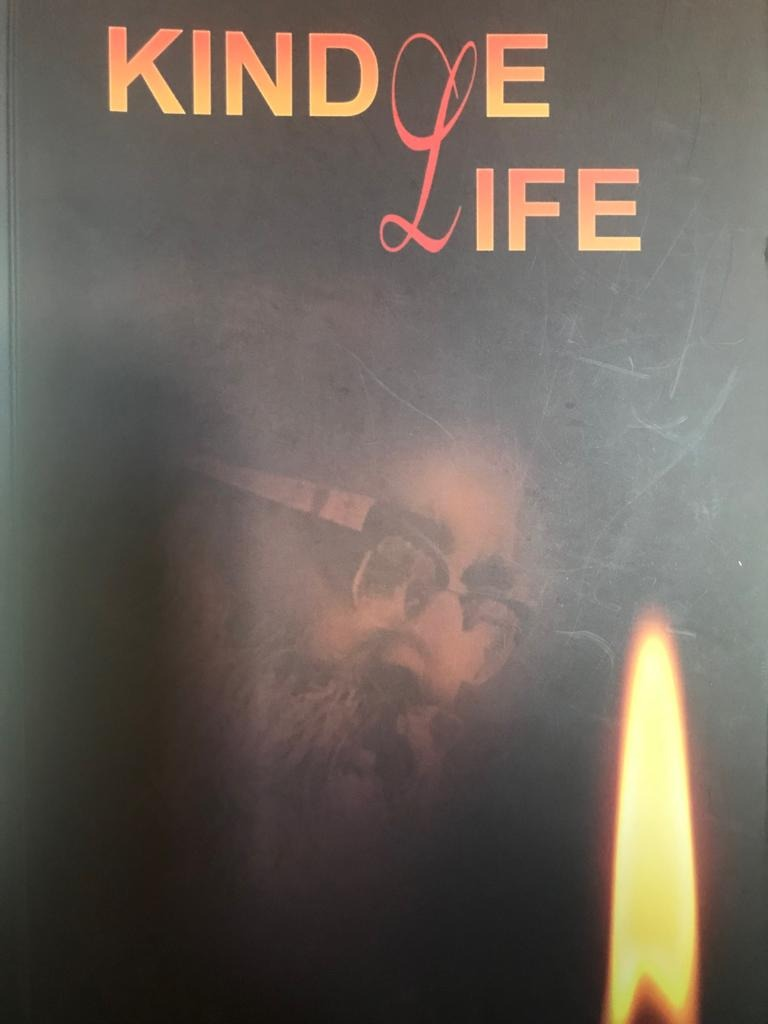
KINDLE LIFE
Vedanta 101 Class Notes

Introduction
As we take this journey and pave the path for Vedanta to enter our lives, this document will act as our journal in which we jot down the discussions we have as we read Gurudev’s Kindle Life book. We can come back here to see how we as a group of seekers read the paragraphs and tried to dissolve these words of wisdom in our own lives. Does this knowledge apply in today’s times? Does it help us meet the mundane with more strength and a better perspective? How can we live this? These are some things we endeavour to answer and help each other kindle life.
Sep 29 ‘2019
We started the class with Nadi Shodhana pranayam and understanding the meaning of the vedic shanti mantra "Om Sahana Vavatu" and the first shloka of Guru Stotram. We established the modus operandi for this Adult Study group and agreed to do our sadhana and read every day and touch back on how much we all read. Coming prepared for class is a prerequisite. Thanks to Radhika ji for preparing today's blog.
- FREEDOM AND LICENSE
“....People have grown from a primitive and barbarous state to be a civilized and intelligent society…”
Is it true? Are we better off today? Some of us could not disagree more. The amount of stress that has been created in today’s world, where being on the run is the only norm, speaks for itself. Weren't people more connected to nature in the olden times?
On the other hand, some felt that since our basic needs are met and because of technological advances, we are able to dedicate time to think about higher goals of life like knowing oneself. People were closer to nature in older times , but they were always busy thinking about the next meal.
Well, in olden times there were Rishis who just closed their eyes and sat in a jungle not worried about the next meal. Even today, only some, like us, are fortunate enough to be born in a particular family according to our karma and have the privilege of such satsang.
So irrespective of the external times and situations, one can turn inward.
“…..man detests any shackles…..”
We don’t like to do something someone else tells us to do. Sometimes we don’t want to do something just because we are being told to do that. One situation we face too often is when we are guiding kids. If we give them too much freedom, then they get lost and if they are too restricted, then their true potential remains hidden.
When we want to influence someone, what is the way to do it? We should first put ourselves out of the picture and try to understand where the other person is coming from. The key is to make them think that it is their idea. As long as they think it’s their idea they will be fine with it.
If we give others the freedom, yet make clear the restrictions where they apply, then we can find a balance. That’s what religion is doing.
“....inability to distinguish between freedom and license is at the root of the modern man’s aversion to religion….”
What is the difference between freedom and license? We are born free, but there are rules that restrict us from overstepping our boundaries and cause discomfort to other beings. Those rules are license. How does religion introduce this license?
Why has religion become a bad word in modern times?
Seems like people tend to exclude people based on religion. There are some flaws in the execution of religion ( like there are some fanatics and people who take advantage of it).
Religion is like a manual for this human life. However, we question the practices recommended like lighting lamp , fasting on some days and want to shun them and pick and choose that which is comfortable. However, the root of all this is discipline and also has deep significance. Like simple chanting has immediate impact on how one feels, the ritual of 13 days of mourning after a person passes away helps one with closure, fasting is most beneficial for health and so on. Such religious license look to instill discipline in us, so we can relish true freedom in this human form.
Contributed by RV
Contributed by RV
Subscribe to:
Posts (Atom)